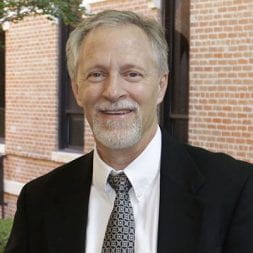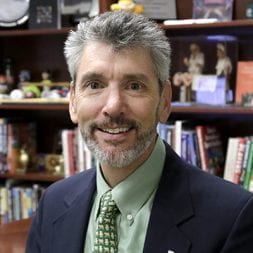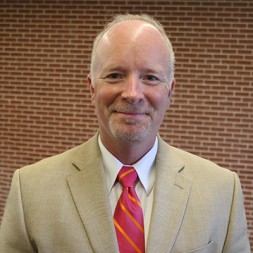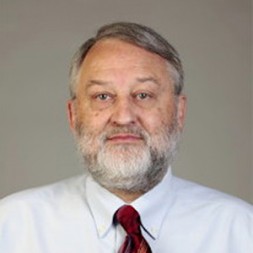









Peter W. Grandjean, Ph.D.
Associate Professor, HHPR
Contact Information
HHPR, One Bear Place #97313
Baylor University
Waco, TX 76798-7313
Office: Rena Marrs McLean Gymnasium 128
Phone: 254-710-3909
Email: Peter_Grandjean@baylor.edu
Education
1996 Ph.D. Texas A&M University, College Station, TX
1992 M.S. Texas Christian University, Fort Worth, TX
1986 B.A. Anderson University, Anderson, IN
Research Interests:
My research interests are aimed at understanding cytokine responses to exercise, nutrition, and pharmaceuticals and how these responses influence cardiovascular, inflammatory, and metabolic processes in humans.

Publications:
Moncada-Jimenez, J., Plaisance, E.P., Araya-Ramirez F.,Taylor, J.K., Ratcliff, L., Mestek, M.L., Grandjean, P.W., and L.F.Aragon-Vargas. Acute hepatic response to diet modification and exercise-inducedendotoxemia during a laboratory-based duathlon. Biology of Sport Vol. 27 (2):111-118, 2010.
Araya-Ramirez F., K.K. Briggs, S.R. Bishop, C.E. Miller, J. Moncada- Jimenezand P.W. Grandjean. Who Is Likely to Benefit From Phase II CardiacRehabilitation? J. Cardiopulm Rehabil Prev Vol. 30(2): 93-100, 2010.
Plaisance, E.P., P.W. Grandjean, R.L. Judd, K.W. Jones and J.K. Taylor. Theinfluence of sex, body composition and non-esterified fatty acids on serumadipokine concentrations. Metabolism Vol. 58: 1557 - 1563, 2009.
Esco, M.R., Olson, M.S., Williford, H.N., Blessing, D.L., Shannon, D. and P.W.Grandjean. The relationship between resting heart rate variability and heartrate recovery. Clinical Autonomic Research Published Online 10, 2009.
Moncada- Jimenez, J., Plaisance, E.P., Mestek, M.L., Araya-Ramirez, F.,Ratcliff, L., Taylor, J.K., Grandjean, P.W., and L. F. AragonVargas. Initialmetabolic state and exercise-induced endotoxaemia are unrelated togastrointestinal symptoms during exercise. Journal of Sports Science andMedicine Vol 8: 252-258, 2009.
Kaushik, S., Plaisance, E.P., Grandjean, P.W., and S.T. Mathews.Extended-release niacin decreases serum Fetuin-A concentrations in individualswith metabolic syndrome. Diabetes/Metabolism Research and Reviews. 25: 427 -434, 2009.
Moncada- Jimenez, J., E. P. Plaisance, M. L. Mestek, L. Ratcliff, F.Araya-Ramirez, J. K. Taylor, P. W. Grandjean and L.F. Aragon-Vargas. Duathlonperformance unaltered by short-term changes in dietary fat and carbohydrates.International Journal of Sports Nutrition and Exercise Metabolism 19(1):47-60,2009.
Mestek, M.L., E.P. Plaisance, L. Ratcliff, J.K. Taylor, S.O. Wee, & P.W.Grandjean. Aerobic exercise and postprandial lipemia in men with metabolicsyndrome. Medicine & Science in Sports & Exercise. 40 (12): 2105 -2111, 2008.
Plaisance, E.P., Mestek, M.L., Mahurin, A.J., Taylor, J.K., Moncada-Jiminez,J., and P.W. Grandjean. Postprandial blood lipid responses to aerobic exerciseand niacin therapy in men with metabolic syndrome. American J. Clin. Nutrition88: 30 - 37, 2008.
Santo, A.S., Cunningham, A.M., Alhasson, S., Browne, R.W., Burton, H., Leddy,J.J., Grandjean, P.W., Horvath, S.M., & P.J. Horvath. NMR analysis does notincrease sensitivity to the effect of soy protein on CVD risk when compared tothe traditional lipid profile. Applied Physiology, Nutrition, and Metabolism.33 (3): 489 - 500, 2008.
Plaisance, E.P., Grandjean, P.W., Brunson, B.L., and R. L. Judd. Increasedtotal and high-molecular weight adiponectin following extended-release niacin.Metabolism. 57 (3): 404 - 409, 2008.
Mestek, M.L., Plaisance, E.P. & P.W. Grandjean. The relationship betweenpedometer-determined and self-report physical activity and body compositionvariables in college-aged males and females. Journal of American College Health57 (1): 39 - 44, 2008.
Wright,G.A., Grandjean, P.W., and D.D. Pascoe. Effects of creatine loading onthermoregulation and intermittent sprint performance in a hot humidenvironment. Journal of Strength & Conditioning Rearch. 21(3): 655 - 660,2007.
Plaisance, E.P., Taylor, J.K., Hilson, B.D., Alhasson, S., Abebe, A., Mestek,M.L., Garner, J.C., and P.W. Grandjean. Cardiovascular fitness & vascularinflammatory markers following acute aerobic exercise. International Journal ofSports Medicine. Vol. 17 (2): 152 - 162, 2007.
Alhasson, S., Reese, K.A., Mahurin, A.J., Plaisance, E.P., Hilson, B.D.,Garner, J.C., Wee, S.O., and P.W. Grandjean. Blood lipid responses to plantstanol ester supplementation and aerobic exercise training. Metabolism Vol. 55:541 - 549, 2006.
Mestek, M.L., Garner, J.C., Plaiance, E.P., Taylor, J.K, Alhasson, S., and P.W.Grandjean. Blood lipid responses after continuous and accumulated aerobicexercise. International Journal of Sport Nutrition and Exercise. Vol. 16 (3):245 - 254, 2006.
Weise, S.D., Grandjean, P.W., Rohack, J.J., Womack, J.W., and S.F. Crouse.Acute changes in blood lipids and enzymes in postmenopausal women afterexercise. Journal of Applied Physiology, Vol. 99 (2): 609 - 615, 2005
Katsanos, C.S, Grandjean, P.W., and R.J. Moffatt. Effects of Low and ModerateExercise Intensity on Postprandial Lipemia and Postheparin Plasma LipoproteinLipase Activity in Physically Active Men. Journal of Applied Physiology 96(1):181 - 188, 2004.
LaMonte, M.J., Ainsworth, B.E., Dubose, K.D., Grandjean, P.W., Davis, P.G.,Yankowitz, F.G., and J.L. Durstine. The hypertriglyceridemic waist phenotypeamong women. Atherosclerosis 171: 123 - 130, 2003.
Krishnamurti, S. and P.W. Grandjean. The effects of simultaneous exercise andloud music on hearing acuity and auditory function. Journal of Strength andConditioning Research. 17 (2): 307-313, 2003.
Lawler, J.M., Z. Hu, J.S. Green, S.F. Crouse, P.W. Grandjean, and R.G. Bounds.Combination of estrogen replacement and exercise protects against HDL oxidationin post-menopausal women. International Journal of Sports Medicine. 23:477-483, 2002
Green,J.S., P.W. Grandjean, S. Weise, S.F. Crouse, and J.J. Rohack. Theinfluence of exercise and estrogen replacement on primary lipid coronary riskmarkers in postmenopausal women. Journal of Aging and Physical Activity 9:115-127, 2001.
Grandjean, P.W., S.F. Crouse and J.J. Rohack. The influence of cholesterolstatus on blood lipid and lipoprotein enzyme changes in sedentary men afterexercise. Journal of Applied Physiology. Vol 89: 472 - 480, 2000.
Bounds, R.G., S.M. Martin, S.F. Crouse, B.C. O'Brien, P.W. Grandjean and C.Inman. Diet and short-term plasma lipoprotein-lipid changes after exercise intrained men. International Journal of Sports Nutrition. Vol. 10 (2):114-127,2000.
Education is an essential ingredient in the formula for success. Certainly, innate ability, creativity, interpersonal skills and perseverance contribute to one's ability to achieve the goals that they have set for themselves. Without education, however, these characteristics are directionless. Moreover, innate ability, creativity, interpersonal skills and perseverance will resonate much further when a solid education is added to the "mix".
The academic setting provides students with an opportunity to acquire knowledge that enriches their perspective of life in general and prepares them for a specific career path. If structured properly, the Christian academic setting fosters a learning environment that builds "precept upon precept" so that students understand what they have learned, are encouraged to integrate their Christian worldview, and are able to apply new information to their life experiences. However, the amount of time allotted for a formal education is limited and the amount of information we would like our students to learn and comprehend can be overwhelming. For example, there is an increasing emphasis to move students through the formal academic process in four years. In addition, our knowledge base is growing at a rate that, in some respects, outpaces our ability to stay current in all aspects of our chosen fields. Therefore, I am convinced that the greatest educational experience I can provide to students is to teach them to "learn how to learn". That is, my role is to introduce a foundation of information that students can build upon - and then implement a variety of learning techniques and information resources that students can access as they continue to grow personally and professionally. It is my responsibility to provide experiences that require students to integrate and apply their worldview and their knowledge, skills and abilities so that they are prepared to face life's challenges and so that they are equipped to improve the human condition for His glory.
Courses Taught:
Introduction to Human Physiology
Clinical Exercise Physiology
Advanced Exercise Physiology: Cardiovascular Aspects
Advanced Methods of Strength & Conditioning