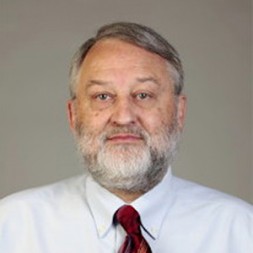









Baylor > Faculty > A-Z > Darryn S. Willoughby, Ph.D.
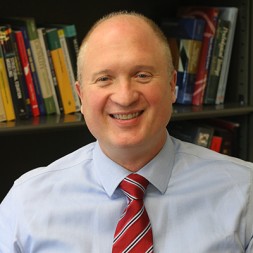
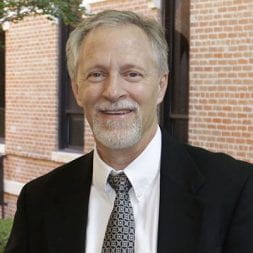
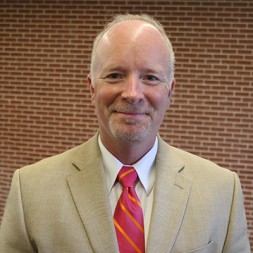
Darryn Willoughby
Darryn Willoughby

Darryn S. Willoughby, Ph.D.

Associate Professor, Health, Human Performance, and Recreation

Director, Exercise and Biochemical Nutrition Laboratory

Baylor University
School of Education, HHPR
One Bear Place #97313
Waco, Texas 76798-7313
Office: Rena Marrs McLean Gymnasium, 120
Lab: Rena Marrs McLean Gymansiun, 117
Phone: 254-710-3504
Fax: 254-710-3527
Email: Darryn_Willoughby@baylor.edu

Degrees:
Ph.D. Texas A&M University, 1993; Specialization in neuromuscular exercise hysiology and biochemistry, sub-specialization in nutritional biochemistry: Dissertation: Clenbuterol and Exercise: Effects of a Beta 2-Adrenoceptor Agonist on Locomotor Endurance Capacity and Muscular Force Production.
M.Ed. Tarleton State University, 1989; Health and Fitness; Thesis title: Comparison of Isotonic Free Weights and Omnikinetic Exercise Machines on Strength.
B.S. Tarleton State University, 1986; Health and Fitness.

Professional Interests:
Molecular Physiology and Biochemistry of Exercise and Nutrition
Cellular and Molecular Physiology of Muscle
Exercise and Sport Nutrition
Human Nutrition, Metabolism, and Weight Management
Neuromuscular Exercise Physiology
Strength Training and Sport Conditioning

Research Interests:
Effects of Exercise Training and Nutritional Intervention on the Physiological, Biochemical, and Molecular Mechanisms Regulating Skeletal Muscle Strength, Hypertrophy, and Atrophy in Athletes, Aging, and other Special Populations

Selected Refereed Publications (last 4 years):

Willoughby, D. S., & Taylor, L. (2004). Effects of concentric and eccentric muscle contractions on serum myostatin and FLRG levels. Journal of Sport Science and Medicine. 3:226-233.

Willoughby, D. S., & Taylor, L. (2004). The effects of sequential bouts of heavy resistance training on androgen receptor expression. Medicine and Science in Sports and Exercise, 36(9), 1450-1459.

Willoughby, D. S. Effects of an alleged myostatin binding supplement and heavy resistance training on serum myostatin, muscle strength and mass, and body composition. International Journal of Sport Nutrition and Exercise Metabolism, 14(4), 461-472.

Willoughby, D. S. (2004). Effects of heavy resistance training on myostatin mRNA and protein expression. Medicine and Science in Sports and Exercise, 36(4), 574-582.

Willoughby, D. S., Taylor, M., & Taylor L. (2003). Glucocorticoid receptor and ubiquitin expression after repeated eccentric exercise.Medicine and Science in Sports and Exercise, 35(12), 2023-2031.

Willoughby, D. S., VanEnk, C., & Taylor, L. (2003). Effects of concentric and eccentric contractions on exercise-induced muscle injury, inflammation, and serum IL-6. Journal of Exercise Physiology, 6(4), 8-15.

Greenwood, M. Kreider, R., Greenwood, L., Willoughby D. S., & Byars A. (2003). Creatine supplementation does not increase the incidence of injury or cramping in college baseball players. Journal of Exercise Physiology, 6(4), 16-23.

Kreider R.,Willoughby D. S., Greenwood M. Parise, G. Payne, E., & Tarnopolsky, M. (2003). Effects of Serum Creatine Supplementation on Muscle Creatine and Phosphagen Levels. Journal of Exercise Physiology, 6(4), 24-33.

Willoughby, D. S., & Rosene, J. M. (2003). Effects of oral creatine and resistance training on Myogenic regulatory factor expression. Medicine and Science in Sports and Exercise, 35(6), 923-929.

Willoughby, D. S., Rosene, J., & Myers, J. Ubiquitin and HSP-72 expression and apoptosis after a single session of eccentric exercise. Journal of Exercise Physiology, 6(2):88-95, 2003.

Willoughby, D. S., Sultemeire, S., & Brown, M. Human Muscle Disuse Atrophy After 28 Days of Immobilization in a Lower-Limb Walking Boot: A Case Study. Journal of Exercise Physiology, 6(2):96-104, 2003.

Willoughby, D. S., McFarlin, B., & Bois, C. (2003). Interleukin-6 expression after repeated bouts of eccentric exercise. International Journal of Sports Medicine, 24(1), 15-21.

Kreider, R., Burke, E., Clark, J., Earnest, C., Greenwood, M., Harris, R., Kalman, D., Kleiner, S., Serrano, E., Volek, J., Ziegenfuss, T., & Willoughby D. S. The neurosurgeon in sport: awareness of the risks of heatstroke and dietary supplements. Neurosurgery, 52(1):252-255, 2003.

Willoughby, D. S., & Nelson, M. (2002). Myosin heavy chain mRNA expression after a single session of heavy resistance exercise. Medicine and Science in Sports and Exercise, 34(8), 1262-1269.

Willoughby, D. S., Priest, J., & Nelson, M. (2002). Expression of the stress proteins, ubiquitin and HSP-72, and myofibrillar protein content after 12 weeks of leg cycling in persons with spinal cord injury. Archives of Physical Medicine and Rehabilitation, 83(5), 649-654.

Willoughby, D. S., & Rosene, J. M. (2001). Effects of oral creatine and resistance training on myosin heavy chain expression. Medicine and Science in Sports and Exercise, 33(10), 1674-1681.

Willoughby, D. S. (2001). Resistance training in the older adult. American College of Sports Medicine Current Comment, April, 1-4.

Willoughby, D. S., & Pelsue, S. (2000). Effects of high-intensity strength training on steady-state myosin heavy chain isoform mRNA expression. Journal of Exercise Physiology, 3(4), 13-25.

Willoughby, D. S., Priest, J, & Jennings, R. (2000). Myosin heavy chain isoform and ubiquitin protease mRNA expression after passive leg cycling in persons with spinal cord injury. Archives of Physical Medicine and Rehabilitation, 81, 157-163.

Professional Honors:
Fellow, International Society of Sports Nutrition, 2003.
Fellow, American Society of Exercise Physiologists, 2001.
Fellow, American College of Sports Medicine, 1998.

Professional Certifications:
Certified Exercise Physiologist, ASEP, Certificate: #11
Certified Nutrition Specialist, AFPA, Certificate: #40087
Certified Strength and Conditioning Specialist, NSCA, Certificate: #901308

Professional Affiliations:
American College of Sports Medicine (ACSM)
American Fitness Professionals and Associates (AFPA)
American Physiological Society (APS)
Federation of the American Societies of Experimental Biology (FASEB)
International Society of Sports Nutrition (ISSN)
National Strength and Conditioning Association (NSCA)
Texas Chapter of the American College of Sports Medicine (TACSM)

Courses Taught:
Undergraduate
Exercise Physiology
Exercise Physiology Laboratory
Strength Training and Conditioning
Exercise Testing and Prescription
Exercise Pharmacology
Human Anatomical Kinesiology

Graduate
Nutritional Biochemistry
Molecular Response to Exercise
Exercise Physiology
Clinical Exercise Testing and Prescription
Exercise Physiology Laboratory
Strength Training and Conditioning
Exercise Biochemistry & Endocrinology
Sports Nutrition
Neuromuscular Exercise Physiology
Cardiac Rehabilitation
Cardiopulmonary Exercise Physiology
Laboratory Techniques in Exercise Physiology
Laboratory Techniques in Molecular Biology
Clinical Exercise Physiology
Applied Neuroanatomy and Physiology