Funded Research / Research News
What is CASPER?
Truell Hyde, Ph.D., director of Baylor's Center for Astrophysics, Space Physics and Engineering Research, describes CASPER and lists some current research projects.
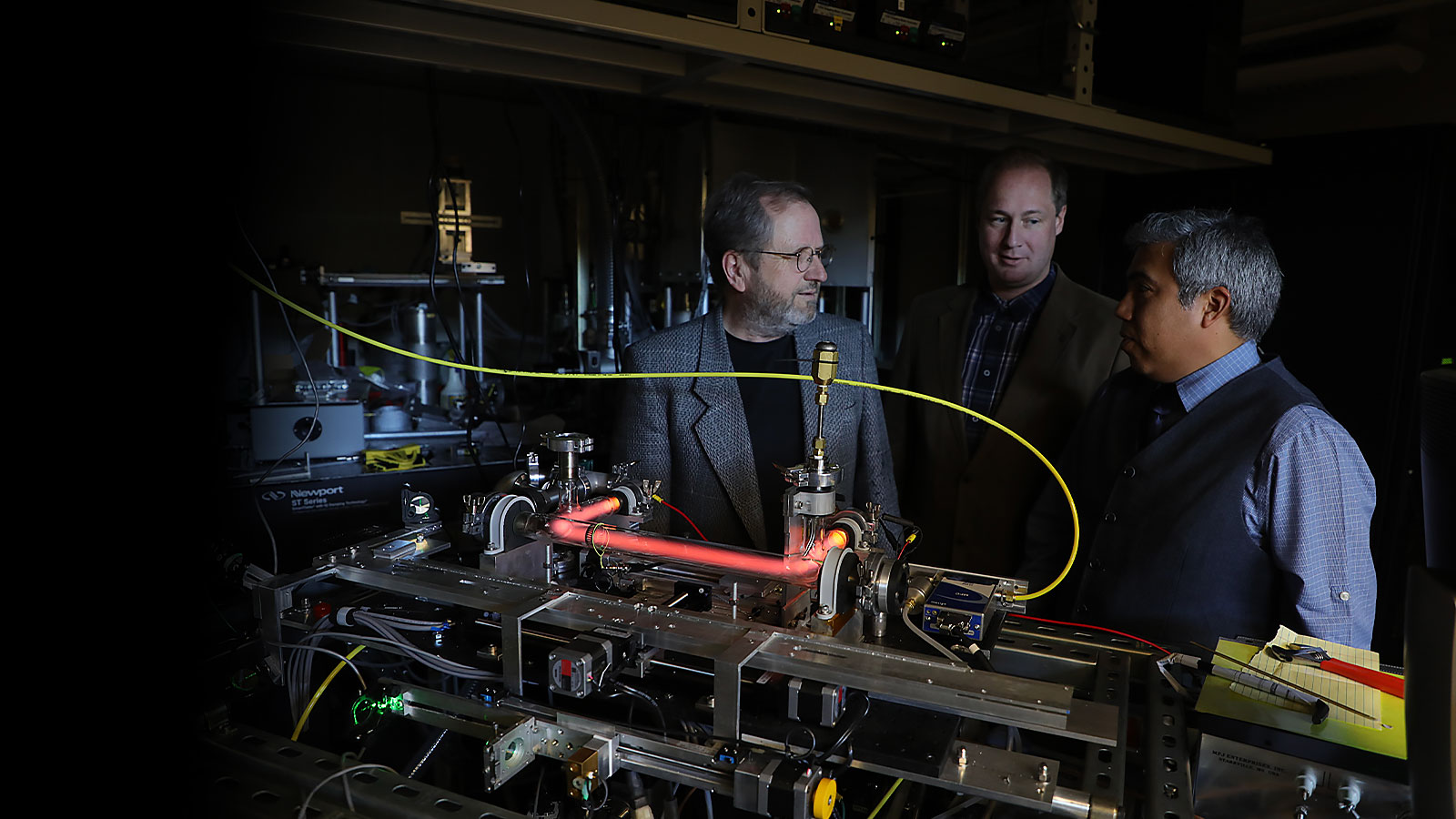
Hypervelocity Impacts and Dusty Plasma Lab
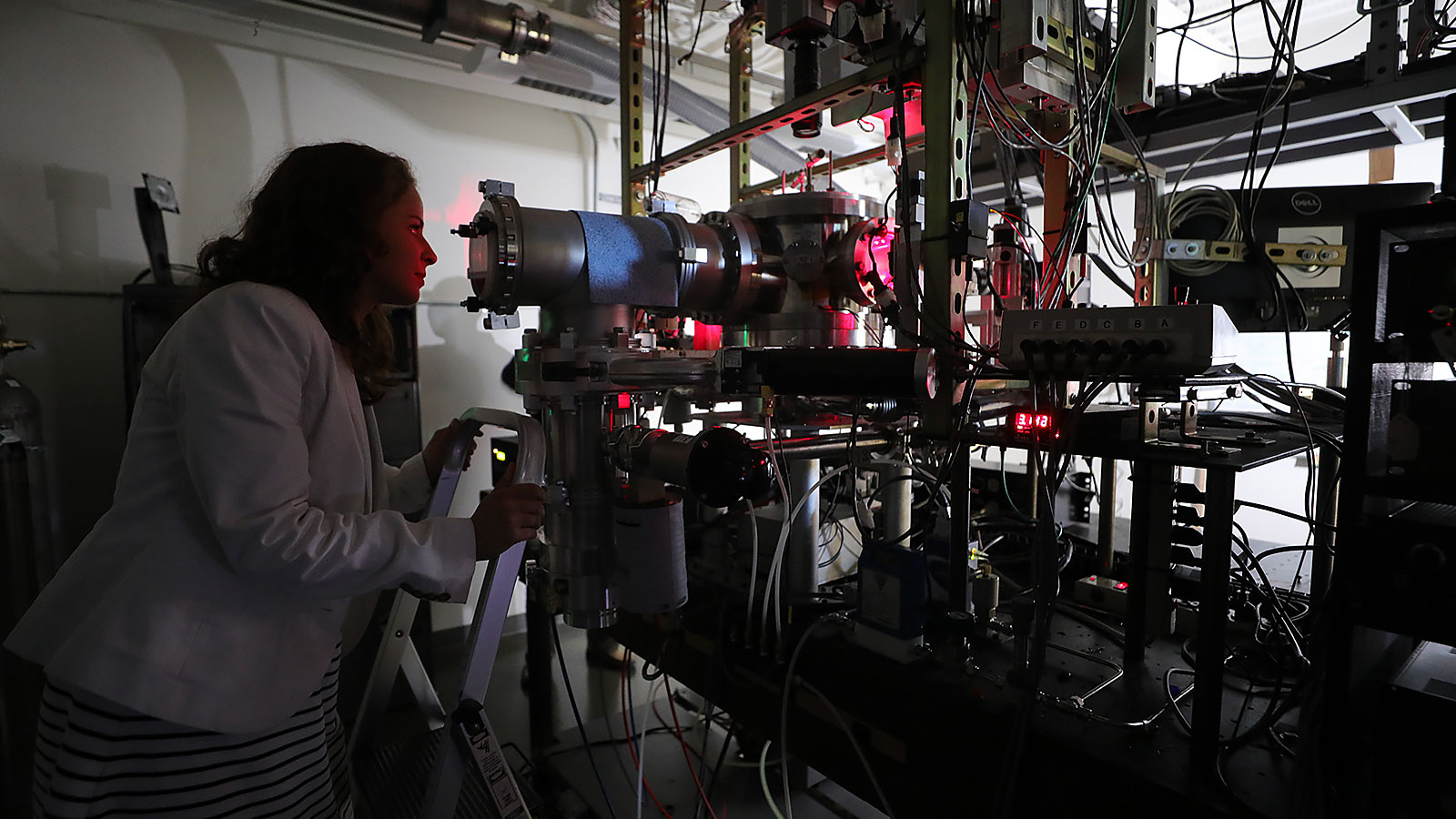
Truell Hyde, Ph.D., professor of physics and director of Baylor's Center for Astrophysics, Space Physics and Engineering Research, describes the Hypervelocity Impacts and Dusty Plasma Lab, or HIDPL, which is located in outstanding facilities within the new Baylor Research and Innovation Collaborative (BRIC) located in the Central Texas Technology and Research Park.
Complex Plasma Physics
Vladimir Nosenko, Ph.D., assistant director of research in Baylor's Center for Astrophysics, Space Physics and Engineering Research, discusses how he views complex plasma physics as the frontier of his field of research.
Quantum Gravity
Anzhong Wong, Ph.D., professor of physics in Baylor's Center for Astrophysics, Space Physics and Engineering Research, discusses his work in classical and quantum gravity.
The Four Fundamental Forces of Nature
Anzhong Wong, Ph.D., professor of physics in Baylor's Center for Astrophysics, Space Physics and Engineering Research, discusses how out of the four fundamental forces of nature, only the force of gravity has not been quantized.
Early Universe Cosmology and String Theory
Gerald Cleaver, Ph.D., professor of physics in Baylor's Center for Astrophysics, Space Physics and Engineering Research, defines early universe cosmology and string theory.
Other Universes May Exist
Gerald Cleaver, Ph.D., professor of physics in Baylor's Center for Astrophysics, Space Physics and Engineering Research, discusses his investigation into string theory and how it could imply the existence of other universes.
Cosmic Dust Bunnies
Lorin Swint Matthews, Ph.D., professor of physics in Baylor's Center for Astrophysics, Space Physics and Engineering Research, discusses her work in designing numerical models of charged dust to show how it interacts and self-assembles.
Planetary Physics
Augusto Carballido, assistant research professor in Baylor's Center for Astrophysics, Space Physics and Engineering Research, briefly describes his field of research in planetary physics.
Modeling Atoms
Peter Hartmann, Ph.D., assistant director of research in Baylor's Center for Astrophysics, Space Physics and Engineering Research, discusses the importance of modeling atoms in order to study their behavior, and how dusty plasmas lend themselves to being modeled.
Multi-Particle Systems
Peter Hartmann, Ph.D., assistant director of research in Baylor's Center for Astrophysics, Space Physics and Engineering Research, discusses the challenges of predicting and modeling systems of tens of thousands of charged particles.
Why Study Dusty Plasma?
Oleg Petrov, Ph.D., assistant director of research in Baylor's Center for Astrophysics, Space Physics and Engineering Research, discusses why it is important to study dusty plasma.